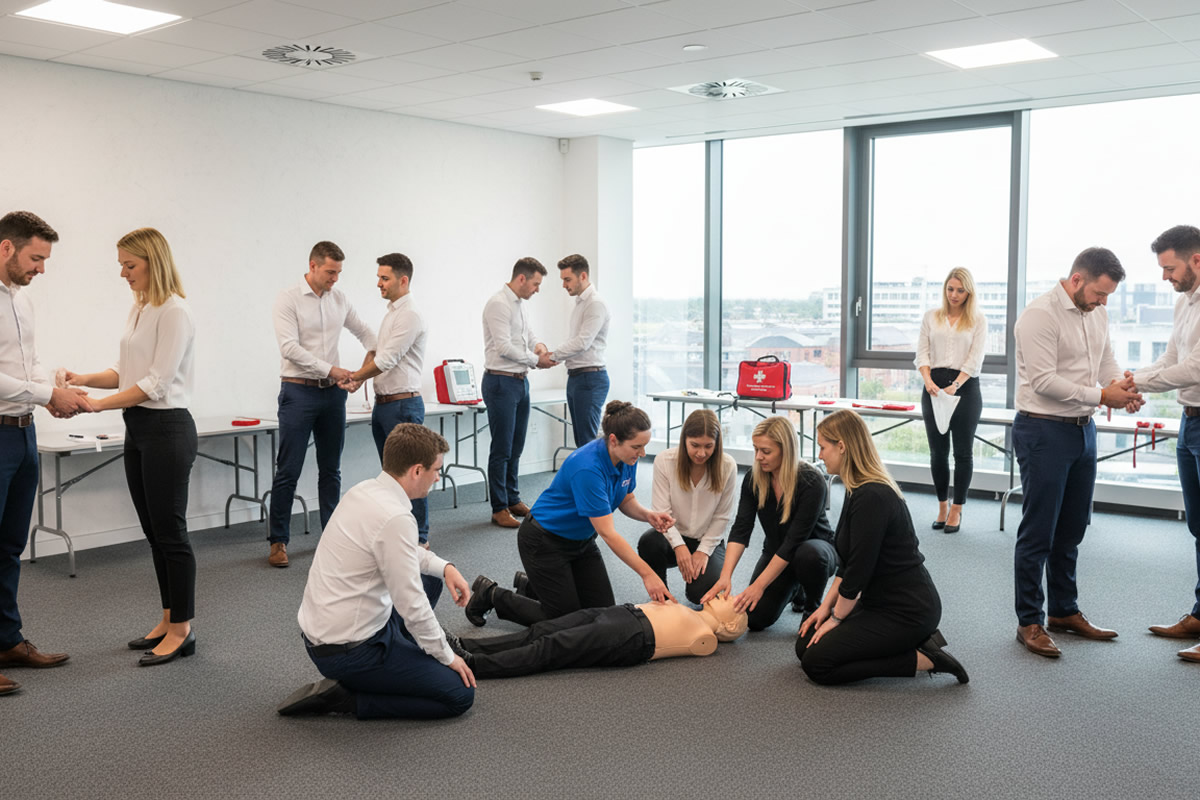
Introduction: Why first aid training cork Matters
first aid training cork remains a critical planning area for Irish employers and organisations because the first minutes of an incident often determine how well the overall outcome is managed. Teams that understand response sequencing, communication priorities and escalation logic are usually more effective than teams that rely on ad-hoc decision-making under pressure.
Across Cork and Munster, organisations are facing a shared challenge: balancing compliance expectations with practical training outcomes that genuinely improve confidence. A course certificate alone does not guarantee readiness. Readiness comes from structured implementation, repeated scenario practice and leadership ownership of safety processes.
This guide breaks the topic into practical actions. You will see what strong teams do differently, which recurring mistakes create risk, and how to link policy requirements with day-to-day operational reality.
Table of Contents
- The Irish operational landscape
- Building a practical response framework
- Implementation by sector and site type
- Quality assurance, refreshers and governance
- Common mistakes and corrective actions
- Action checklist for managers
- Next steps and related training options
The Irish Operational Landscape
Evidence from safety audits and training debriefs suggests that response quality is strongly influenced by local operational pressures. In hospitality-heavy zones around Killarney, team turnover and seasonal staffing can reduce consistency unless training plans are refreshed regularly. In construction and manufacturing settings around Cork and Limerick, incident complexity and physical risk profiles demand stronger emphasis on scene control, communication flow and coordinated role handover.
Schools, childcare settings and sports clubs face a different dynamic. They often need rapid response protocols that are technically accurate but easy for non-clinical staff to apply. This creates a non-trivial design requirement: procedures must be robust enough for compliance yet simple enough for consistent execution during stressful moments.
Building a Practical Response Framework
A resilient first aid framework usually includes five core layers. First, role clarity: team members must know who leads assessment, who calls emergency services, who controls bystander flow and who retrieves equipment. Second, equipment confidence: AED location, first aid kit access and emergency communication channels should be known by all relevant staff. Third, scenario rehearsal: teams improve markedly when they practise realistic events rather than only discussing theory.
Fourth, escalation documentation: after an incident, leadership should capture what happened, what worked and where delays occurred. Fifth, renewal cadence: refresher intervals should be planned before certificates expire so capability does not decay quietly between training cycles.
Implementation tip: Run 20-minute scenario drills quarterly. Short, focused drills keep procedures familiar without disrupting operations.
Implementation by Sector and Site Type
For office and professional-service teams, the central challenge is usually confidence rather than policy awareness. Staff may understand the theory but hesitate in practical situations. Scenario design should therefore focus on decisive first actions, clear communication and structured handover. For industrial sites, training should integrate hazard management and safe access logic, because responders may need to make decisions in noisy or physically constrained environments.
Childcare and education settings benefit from role-mapped protocols and rehearsal of communication with guardians and emergency services. Sports organisations need rapid pitch-side response, crowd awareness and post-incident reporting discipline. In every setting, internal ownership by supervisors is a major performance multiplier.
Quality Assurance, Refreshers and Governance
High-performing organisations treat first aid as an ongoing governance process. This means periodic review of kit readiness, attendance tracking for trained personnel, and a documented refresher plan linked to staff movement and site growth. When new hires arrive or departments are reorganised, response coverage should be re-validated rather than assumed.
It is widely argued that review cadence should be proportionate to risk. Faster-moving environments may require shorter intervals between practical drills. Lower-risk contexts still benefit from scheduled reinforcement, especially for CPR and AED confidence, where time-sensitive execution matters.
Common Mistakes and Corrective Actions
- Certificate-only mindset: Teams complete training but never rehearse on site. Correction: introduce scheduled scenario drills and short post-drill debriefs.
- Unclear role ownership: Multiple people assume someone else is leading. Correction: publish role cards and run role-specific practice.
- Equipment uncertainty: Staff do not know where critical items are. Correction: include equipment walk-throughs in onboarding and refresher sessions.
- No escalation protocol: Calls and communication become inconsistent. Correction: standardise communication scripts and authority thresholds.
- Renewal drift: Expiry dates pass unnoticed. Correction: maintain an internal training register and pre-book renewals.
Action Checklist for Managers
- Map your team risk profile and identify high-probability incident types.
- Assign clear first response roles by shift and site.
- Validate AED and first aid kit locations with all relevant staff.
- Schedule quarterly scenario drills and document observations.
- Set a rolling refresher timetable before certification deadlines.
- Link lessons learned to your policy and onboarding process.
Comparison Box: Reactive vs Prepared Teams
Reactive Pattern
- Training treated as a one-off compliance event.
- Unclear ownership during incidents.
- Equipment location knowledge varies by individual.
- Post-incident learning is informal or inconsistent.
Prepared Pattern
- Training linked to a recurring rehearsal calendar.
- Roles assigned by shift with documented backup coverage.
- AED and kit checks integrated into routine safety activity.
- Debrief findings converted into process improvements.
Implementation Timeline You Can Use
Week 1 should focus on gap mapping and role assignment. Week 2 can then establish equipment readiness checks and communication scripts. By Week 3, teams should complete scenario-led practice linked to likely incidents in their environment. Week 4 is best used for a leadership debrief where outcomes are documented and refresher cadence is pre-booked.
This staged approach is intentionally pragmatic. It gives organisations a framework that is easy to execute while still addressing underlying risk drivers. The prevailing view in training governance is that short implementation cycles with clear accountability produce more durable behaviour change than long plans with diffuse ownership.
Next Steps and Related Training Options
If your organisation is reviewing first aid training cork, the fastest route to improvement is a structured gap assessment followed by targeted training. You can compare pathways on our courses page, review local availability on area pages, and request tailored scheduling through contact.
Limerick First Aid supports employers, schools, clubs and community organisations across Munster with practical delivery designed around operational reality, not generic templates.